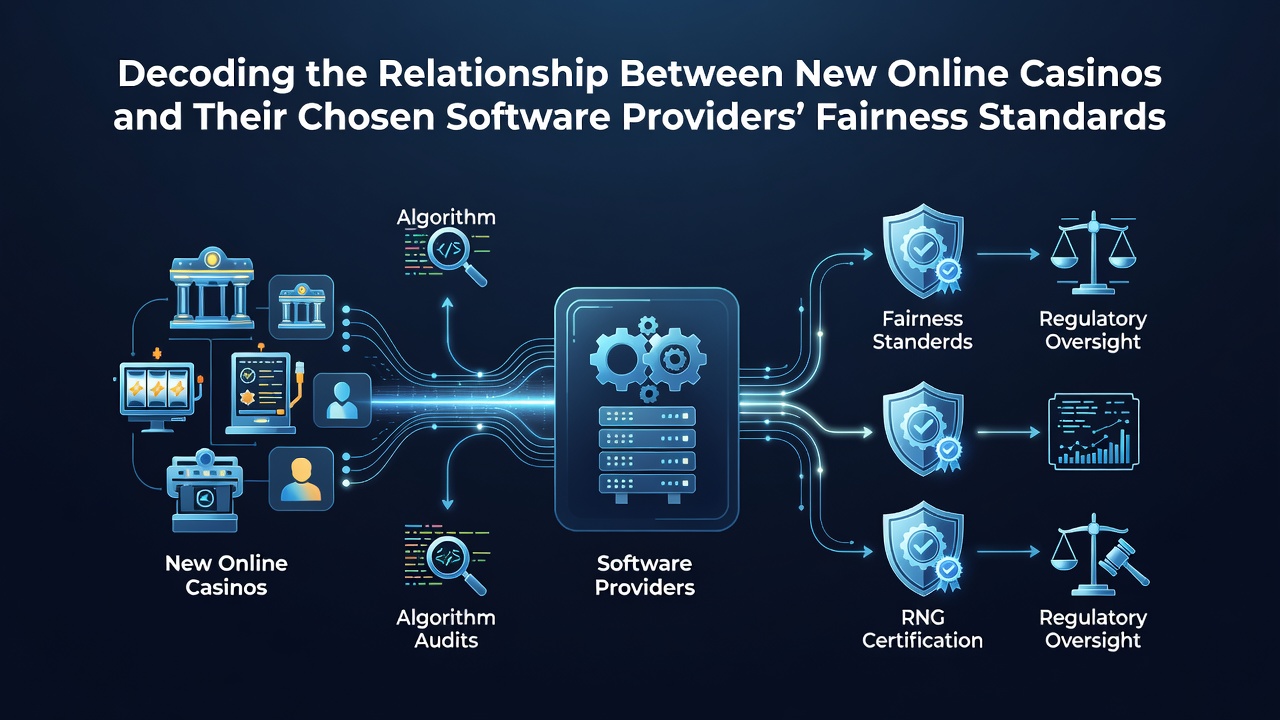
Exploring Ties Between Emerging Online Casinos and Software Fairness Protocols
As of July 2026 emerging online casinos continue to expand rapidly across multiple jurisdictions, and their selection of software providers plays a central role in meeting fairness requirements set by regulatory bodies. New operators often partner with established developers because those companies already hold certifications for random number generators and game mechanics from independent testing labs. Data from industry reports shows that casinos launching in the first half of 2026 prioritized providers with proven audit histories over newer entrants still building their compliance portfolios.
Provider Selection Patterns Among Recent Market Entrants
Operators entering the market in 2026 typically evaluate software vendors based on licensing status, audit frequency, and integration with oversight frameworks from authorities such as the Malta Gaming Authority and the Alcohol and Gaming Commission of Ontario. These choices allow new sites to demonstrate compliance quickly while building player trust through recognized fairness seals. Research indicates that casinos choosing providers with multi-jurisdictional approvals experience smoother licensing processes compared to those relying on single-region developers.
Take one platform that debuted in early 2026 and selected a provider already certified by both European and North American labs. That decision enabled the operator to launch with a full suite of verified titles rather than waiting for separate testing cycles. Observers note that such partnerships reduce the time between receiving an operating license and going live with audited games.
Fairness Standards Embedded in Software Agreements
Contracts between new casinos and their chosen providers routinely include clauses requiring regular RNG testing, payout percentage verification, and source code reviews. These terms align with standards from organizations like the International Association of Gaming Regulators and academic studies on probabilistic game integrity. Providers supply documentation showing that games meet minimum return-to-player thresholds and that no external manipulation of outcomes is possible once the system is deployed.
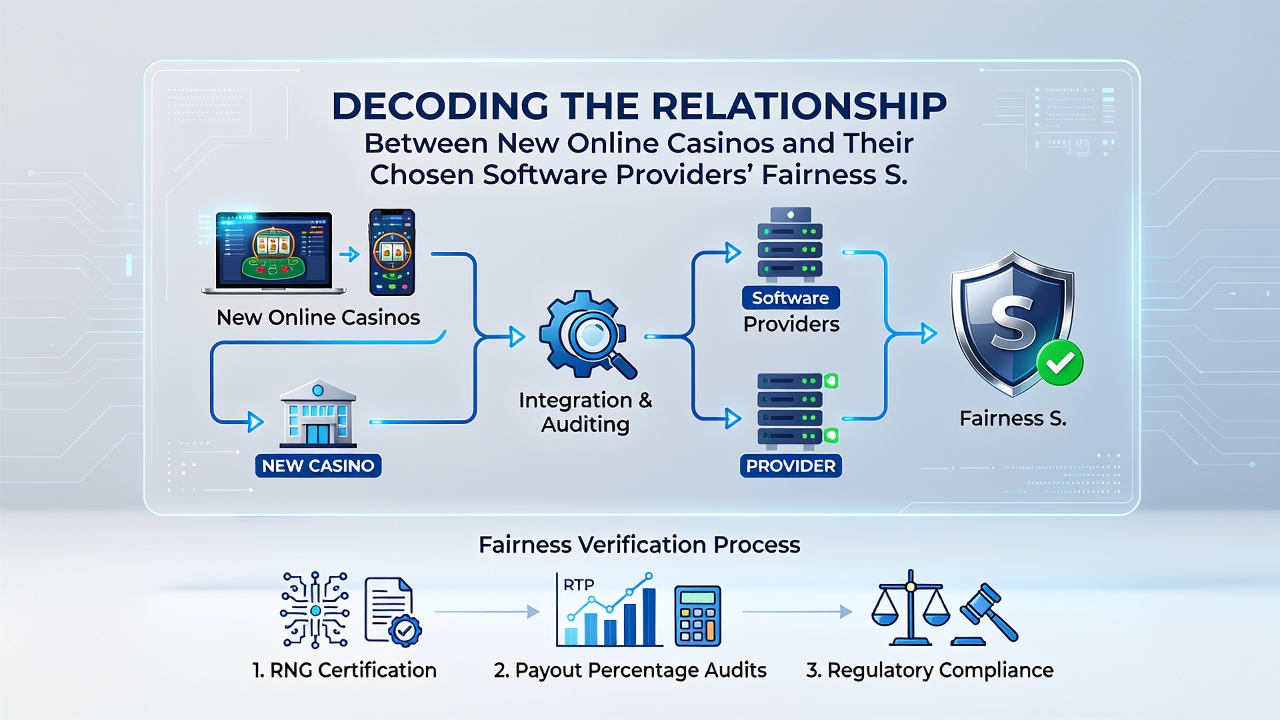
Figures from regulatory filings reveal that in July 2026 most new operators demanded quarterly audits rather than annual ones, a shift driven by updated guidelines in several markets. Those who've studied licensing trends point out that providers offering automated compliance dashboards give casinos real-time visibility into certification status, which simplifies reporting to oversight bodies.
Regulatory Influence on Partnership Decisions
Government agencies in different regions have tightened expectations around software provenance. The Alcohol and Gaming Commission of Ontario, for example, requires explicit proof that every game title has undergone independent evaluation before integration. Similar requirements appear in Australian state frameworks and in guidance from the Gibraltar Regulatory Authority. New casinos therefore gravitate toward providers that already maintain active relationships with these entities.
One study released in spring 2026 examined 47 newly licensed platforms and found that 38 had selected vendors holding at least three separate jurisdictional certifications. The remaining nine later expanded their provider lists after initial audits flagged gaps in documentation. This pattern underscores how fairness standards directly shape vendor shortlists during the setup phase.
Technical Integration and Ongoing Compliance
Once agreements are signed, technical teams from both the casino and the provider work together to embed fairness controls into the platform architecture. This includes seeding RNG algorithms correctly, configuring payout tables according to certified percentages, and establishing secure channels for audit data transmission. Providers often supply APIs that feed directly into regulatory reporting systems, reducing manual errors.
Those who have tracked platform launches note that casinos using providers with built-in compliance tools encounter fewer delays when regulators request additional evidence. The relationship extends beyond initial certification because software updates must also pass re-testing before deployment.
Conclusion
The connection between new online casinos and their software providers centers on verifiable fairness mechanisms that satisfy multiple regulatory requirements simultaneously. As markets evolve through July 2026 adn beyond, operators continue to favor vendors whose certifications align with the strictest available standards, allowing faster market entry and sustained compliance. External references such as Malta Gaming Authority guidelines and research from the Canadian Institute for Gambling Research further illustrate how these partnerships support consistent player protection across jurisdictions.